
Author Archives: Zuly Cabrera Aldana
What did you like most in class?
I know that the professor asked this in class but some classmates are pretty shy and do not answer in front of other classmates and rather respond online. What did you like most? What text spoke to you the most? Why did it speak to you? What did you learn? After finishing this semester do you feel like you learned more or less than before this class?
Zuly’s Reading Questions for April 5th
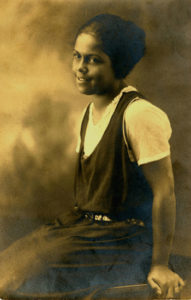
Background Information: Gwendolyn Bennett.
“Bennett is known for her poems short stories. Most of her works were published between the mid-1920’s and late 1930’s. Some notable poems include: “Wind”, “On a Birthday”, “Street Lamps in Early Spring”, “Lines Written at the Grave of Alexandre Dumas” and “Moon Tonight”. Two short stories, “Wedding Day” and “Tokens”, were published in 1926 and 1927, respectively. Her work was based on the Harlem Renaissance; empathizing on Harlem culture, African values and racial pride” (Rohrbach Library Home: Gwendolyn Bennett).
The Wedding Day
- Why do you think Bennett describes Paul Watson very clearly at the beginning of the short story? Why do you think Bennett describes the hatred that Paul has?
- Why was it so important for Bennett to explain in the text Paul’s culture? Why do you think that Bennett mentioned France in the text? “The close of the war gave him his place in French society as a hero” (Bennett143).
- The text that we have been reading in class, the authors have mentioned that the soldiers who have not died from the war… still live at war. By this I mean have internal conflicts due to the trauma they have lived. My point is, why does Bennett only mention in the text “With only a memory of the war and an ugly scar on his left cheek he took up his old life” (Bennett 143). Do you think he ever recovered from the war?
“Gwendolyn Bennett, Poet, and Artist Born.” African American Registry, 29 Jan. 2022, https://aaregistry.org/story/gwendolyn-bennett-was-a-great-poet-and-artist/.
“Rohrbach Library Home: Gwendolyn Bennett: Biography.” Biography – Gwendolyn Bennett – Rohrbach Library Home at Kutztown University of Pennsylvania, 31 Oct. 2018, https://library.kutztown.edu/bennett.
Stragglers in the Dust
- Why do you think Miller mentions the forgotten soldiers? The soldiers that are unknown?? As if the identity of the soldiers are just numbers but not as human beings?? We have seen this couple of times in the readings before.
- Why do you think in the text it mentions on page 3, “NAN. Yuh know it’s kinda nice dat dey bring all dem wreaths and ribbons to put on him, but somehow Ah wishes dey had lef’ him where he was” (Miller 3).
- Why do you think Miller mentions France in the text?
African Americans in the Great War: Daly Vocabulary and Historical Support
How many African Americans served?
When the United States entered the war, African Americans were divided in their responses. Some influential leaders, like W.E.B. Du Bois, viewed military service as an important means towards achieving racial equality and encouraged African Americans to enlist, hopeful that by showing their patriotism and willingness to sacrifice for their country, the nation would no longer deny them civil rights and equal citizenship. Others were disillusioned from the terrible treatment they received in society, and felt that they had nothing to gain from fighting for a country that viewed them as second-class citizens.

While some African Americans did voluntarily enlist when America first entered the war, the War Department limited the number of black volunteers. However, the government’s call for volunteers produced less than satisfactory numbers of white Americans, leading to the enactment of the Selective Service Act in May 1917. This gave the president the power to draft soldiers, and required all men between the ages of 21 and 31 to register.
Ultimately, over 380,000 black men served during World War I. Around 4,000 were volunteers, while the majority (about 367,710) were draftees (Mjagki 76).
Flyer calling for draft registration
Training of African Americans
African Americans were not allowed to serve in the Marine Core, and could only hold menial positions in the Navy. The Army was a little more progressive on this front, as African Americans were allowed to serve in most roles within this branch. However, few African Americans actually got to serve in combat units–most were assigned to labor battalions.

Still, the Army was heavily racially segregated. African Americans attended segregated training camps, where they received very poor treatment. The conditions were inadequate, to say the least–the men went extended periods of time without proper clothing,
lacking proper housing and sanitary facilities, and poor medical treatment. Similarly to the unequal conditions of the segregated camps, the training that African American troops received was also subpar. Many African Americans never got any military equipment, and those that did were often the last men in the camps to get things like weapons and gas masks. Very little was done to prepare black soldiers for active duty, as the white officers who commanded most black soldiers felt this would be a waste of time, citing the fact that most African Americans were assigned to labor units anyway (in addition to racist ideology regarding the intelligence and intellectual capabilities of African Americans) (Mjagki).

Map of U.S. training camps and cantonments

One of the most significant camps was at Fort Des Moines in Iowa, which was an African American officers camp. Here, they trained by practicing drilling, using rifles and bayonets, reading maps, signaling, etc. By October 1917, 639 of the original candidates graduated and were commissioned as captains and first/second lieutenants. Fun fact: Victor Daly actually attended and successfully completed training at the Des Moines camp!
What roles were they given in the war effort?
The roles of African American soldiers in WWI when enlisting in the military preparing to fight in the war. Many African American soldiers served in segregated units that fought to create equality in the nation. The civil rights organization NAACP, “ Soldier Troubles” meaning this form helped to fight against maltreatment of African American soldiers. The men who did not enlist in non-combative roles during WWI served as Services of Supply, consisting of stevedore, labor, and engineers service battalions and companies. The roles in Service Supply helped to support the war such as providing materials. Also, during WWi, African American doctors that served during the war would provide their services for wounded and sick soldiers in “all- African American units”. “ The majority of all African American doctors studied at Meharry Medical College in Nashville, Tenn., Howard University College of Medicine in Washington, D.C. and the Leonard Medical School at Shaw University in Raleigh, N.C.” (Rifenburg). “When World War I broke out, there were four all-black regiments: the 9th and 10th Cavalry and the 24th and 25th Infantry” (Bryan). “By the end of World War I, African Americans served in cavalry, infantry, signal, medical, engineer, and artillery units, as well as serving as chaplains, surveyors, truck drivers, chemists, and intelligence officers” (Bryan).

“Photo credit (Photo courtesy of IIP Photo Archive/NARA/U.S. Department of State)”

Medical Supplies and tools.World War I
The picture taken of an African American soldier, “ William Henry Furrowh of Wilmington served during World War I, worked in the segregated labor unit in the American Expeditionary Forces that Joined the British and French troops along the Western Front in France” (Rifenburg).

William Henry Furrowh’s portrait
How did they come to fight with the French?
African American soldiers started to fight with the French when arriving in “France in 1917 and in early 1918, the 369th United States Infantry, a regiment of African-American combat troops, arrived to help the French Army. Earning the reputation from the Germans as “Hell Fighters,” the 369th was nicknamed the “Harlem Hell Fighters” because the regiment “never lost a man through capture, lost a trench or a foot of ground to the enemy. The 369th was also the first to reach the Rhine River and provided the longest service of any regiment in a foreign army. They fought in the trenches for 191 days and the entire regiment received the Croix de Guerre medal for their actions at Maison-en-Champagne.” (Rifenburg). When arriving in France the African American soldiers were treated with respect and equality. The African American soldiers felt heard and needed with the French instead of the maltreatment they received when fighting with the United States.


“African Americans in the Military during World War I.” National Archives and Records Administration, National Archives and Records Administration, 28 Aug. 2020, https://www.archives.gov/research/african-americans/wwi/war.
Barrow, Mandy. “River Rhine.” Facts about the River Rhine, 26 Mar. 2022, http://www.primaryhomeworkhelp.co.uk/rivers/rhine.htm.
Bryan, Jami L. “Fighting for Respect: African-American Soldiers in WWI.” The Campaign for the National Museum of the United States Army, 2021, https://armyhistory.org/fighting-for-respect-african-american-soldiers-in-wwi/#:~:text=By%20the%20end%20of%20World,%2C%20chemists%2C%20and%20intelligence%20officers.
Rifenburg, Leigh, et al. “African-American Participation during World War I.” Division of Historical and Cultural Affairs – State of Delaware, 13 Apr. 2021, https://history.delaware.gov/world-war-i/african-americans-ww1/.
Scott, Emmet J, et al. “The African American Odyssey: A Quest for Full Citizenship World War I and Postwar Society.” Library of Congress, 9 Feb. 1998, https://www.loc.gov/exhibits/african-american-odyssey/world-war-i-and-postwar-society.html.
Wright, Ben. “Victory and Defeat: World War I, the Harlem Hellfighters, and a Lost Battle for Civil Rights.” Afro – Americans in New York Life and History 38.1 (2014): 35-70. ProQuest. Web. 27 Mar. 2022.