Gassing Up the Great War

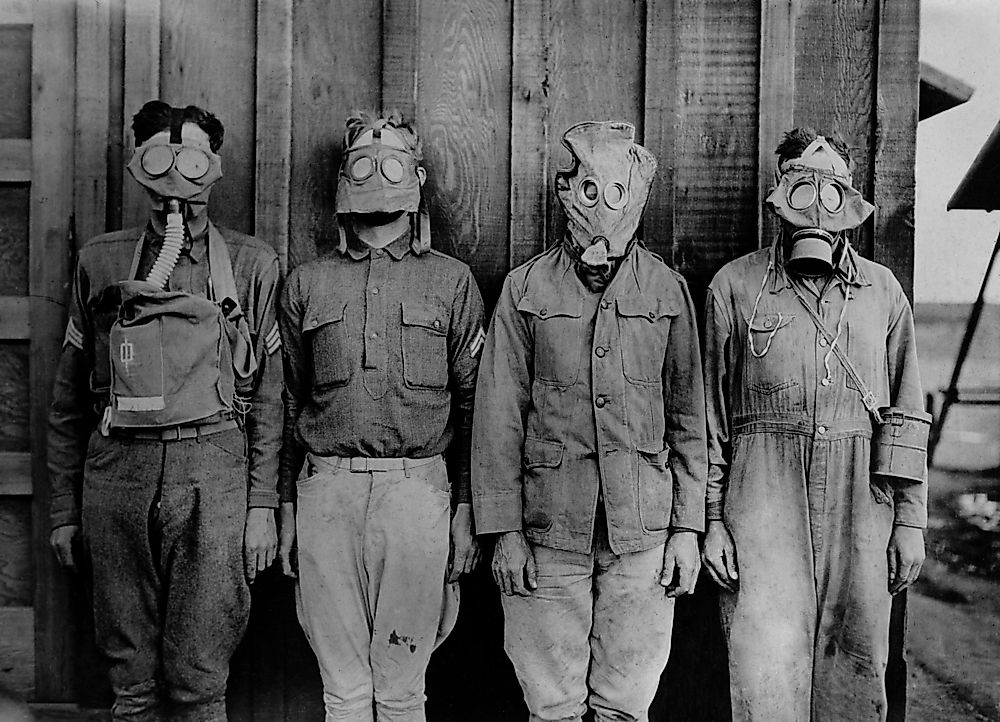
The creepiest WWI equipment (Photo via World Atlas).

Gas! GAS! Quick, boys! — An ecstasy of fumbling,
Fitting the clumsy helmets just in time;
But someone still was yelling out and stumbling,
And flound’ring like a man in fire or lime …
Dim, through the misty panes and thick green light,
As under a green sea, I saw him drowning.
In all my dreams, before my helpless sight,
He plunges at me, guttering, choking, drowning.

— Wilfred Owen, “Dulce et Decorum est”, 1917

Chemical warfare developed rapidly during World War I. Eager to attack their enemies fatally and quickly, scientists across Europe began isolating and packaging gaseous poisons to add to their arsenal. While gas only caused 1% of deaths overall, its fear-inducing effects were so psychologically impactful that the Geneva Protocol banned it in 1925 (Gas in The Great War). There were several kinds of gas used in the war, from relatively innocuous to life-ruining and deadly.

France was the first country to use gases as weapons of war. In 1914, they used xylyl bromide (C6H4(CH3)(CH2Br) and ethyl bromoacetate (CH2BrCO2C2H5) for their effects as lachrymators (Gas in The Great War). These compounds, known as tear gas when aerosolized, are irritants of the eyes and lungs — they cause tearing (hence the name), temporary blindness, and can restrict breathing. Symptoms clear within 30 minutes, so tear gas was overall not effective (Gas in The Great War). Tear gas is still commonly used today in various forms, such as pepper spray or mace, for self-defense or crowd control (“Tear Gas”).

Germans took the concept and ran with it. In April of 1915, German troops deployed chlorine (Cl) gas against the Allied forces in Ypres. British and French troops fled their frontline trenches because they had no countermeasure — at high concentrations, this chemical damages airways and leads to asphyxiation through pulmonary edema (“Chemical Weapons in World War I”). This is because chlorine reacts with water (H2O) to form hydrochloric acid (HCl). Pulmonary edema causes wheezing, blue lips, frothy spit mixed with blood, heart palpitations, and, of course, death (“Pulmonary Edema – Symptoms and Causes”).

One British soldier, according to theworldwar.org, had this to say about chlorine gas: “A panic-stricken rabble of Turcos and Zouaves with gray faces and protruding eyeballs, clutching their throats and choking as they ran, many of them dropping in their tracks and lying on the sodden earth with limbs convulsed and features distorted in death (City et al.).” Chlorine is extremely conspicuous in both odor and color, and wind easily shifts its path, so its use quickly fell off (Gas in The Great War).

The next compound war-scientists turned to was phosgene (COCl2), a colorless gas with a slight odor. Although it is deadlier than chlorine, phosgene symptoms often took over 24 hours to appear. Phosgene is also an asphyxiating agent with toxicity caused by its effects on the -OH, -NH2, and -SH groups of proteins found in the alveoli of lungs, disrupting gas exchange and ultimately causing pulmonary edema (“Phosgene”). Its odor does not manifest until it is past lethal concentrations, so it was stealthier than chlorine (Gas in The Great War). Phosgene caused the most deaths by chemical warfare in WWI (“Chemical Weapons in World War I”).

The most infamous gas of the Great War was mustard gas (commonly given with the formula (ClCH2CH2)2S). Mustard gas gets its name from the presence of sulfur, a chemical known for its yellow color (“Mustard Gas”). Sulfur mustard is a blistering agent, and it creates oozing blisters on the skin and in the lungs (Gas in The Great War). While other war gasses killed its victims near-immediately, blisters from mustard gas exposure prevented soldiers from battling on the front lines (Fitzgerald). This gas is heavier than air and water, so it contaminated deep areas like trenches for extended periods of time. Treating blistered lungs was more difficult than treating phosgene and chlorine gas-affected lungs; the long-term effects are described by Harry L. Gilchrist as follows:

At first the troops didn’t notice the gas and were not uncomfortable, but in the course of an hour or so, there was marked inflammation of their eyes. They vomited, and there was erythema of the skin. . . . Later there was severe blistering of the skin, especially where the uniform had been contaminated, and by the time the gassed cases reached the casualty clearing station, the men were virtually blind and had to be led about, each man holding on to the man in front with an orderly in the lead. (Fitzgerald)

Many conflicts following World War I involved gas attacks against unprepared people (“Chemical Weapons in World War I”). Chemical warfare is terrifying, yet it remains used even in modern times. The astonishing willingness to use these messed-up tactics set precedents for a century and more to come — German scientist Fritz Haber’s work led to Zyklon B, a gas used against Jewish victims of the Holocaust (Gas in The Great War).

It was remarked as a joke that if someone yelled ‘Gas’, everyone in France would put on a mask. … Gas shock was as frequent as shell shock.

— H. Allen, Towards the Flame, 1934

Works Cited

“Chemical Weapons in World War I.” Wikipedia, 4 Feb. 2022. Wikipedia, https://en.wikipedia.org/w/index.php?title=Chemical_weapons_in_World_War_I&oldid=1069960841. City, Inscription on the Liberty Memorial Tower in Downtown Kansas, et al. “Collection Spotlight: First Usage of Poison Gas.” National WWI Museum and Memorial, 24 Mar. 2015, https://www.theworldwar.org/support/donate-object/recentacquisition/poison-gas. Fitzgerald, Gerard J. “Chemical Warfare and Medical Response During World War I.” American Journal of Public Health, vol. 98, no. 4, Apr. 2008, pp. 611–25. PubMed Central, https://doi.org/10.2105/AJPH.2007.11930. Gas in The Great War. https://www.kumc.edu/school-of-medicine/academics/departments/history-and-philosophy-of-medicine/archives/wwi/essays/medicine/gas-in-the-great-war.html. Accessed 8 Feb. 2022. “Mustard Gas.” Wikipedia, 10 Feb. 2022. Wikipedia, https://en.wikipedia.org/w/index.php?title=Mustard_gas&oldid=1071091277. “Phosgene.” Wikipedia, 4 Feb. 2022. Wikipedia, https://en.wikipedia.org/w/index.php?title=Phosgene&oldid=1069859915. “Pulmonary Edema – Symptoms and Causes.” Mayo Clinic, https://www.mayoclinic.org/diseases-conditions/pulmonary-edema/symptoms-causes/syc-20377009. Accessed 14 Feb. 2022. “Tear Gas.” Wikipedia, 5 Jan. 2022. Wikipedia, https://en.wikipedia.org/w/index.php?title=Tear_gas&oldid=1063803991.
Terrencia Johnson’s Reading Questions for Thursday 2/17/2022 : Book Two (Pages 71-140)

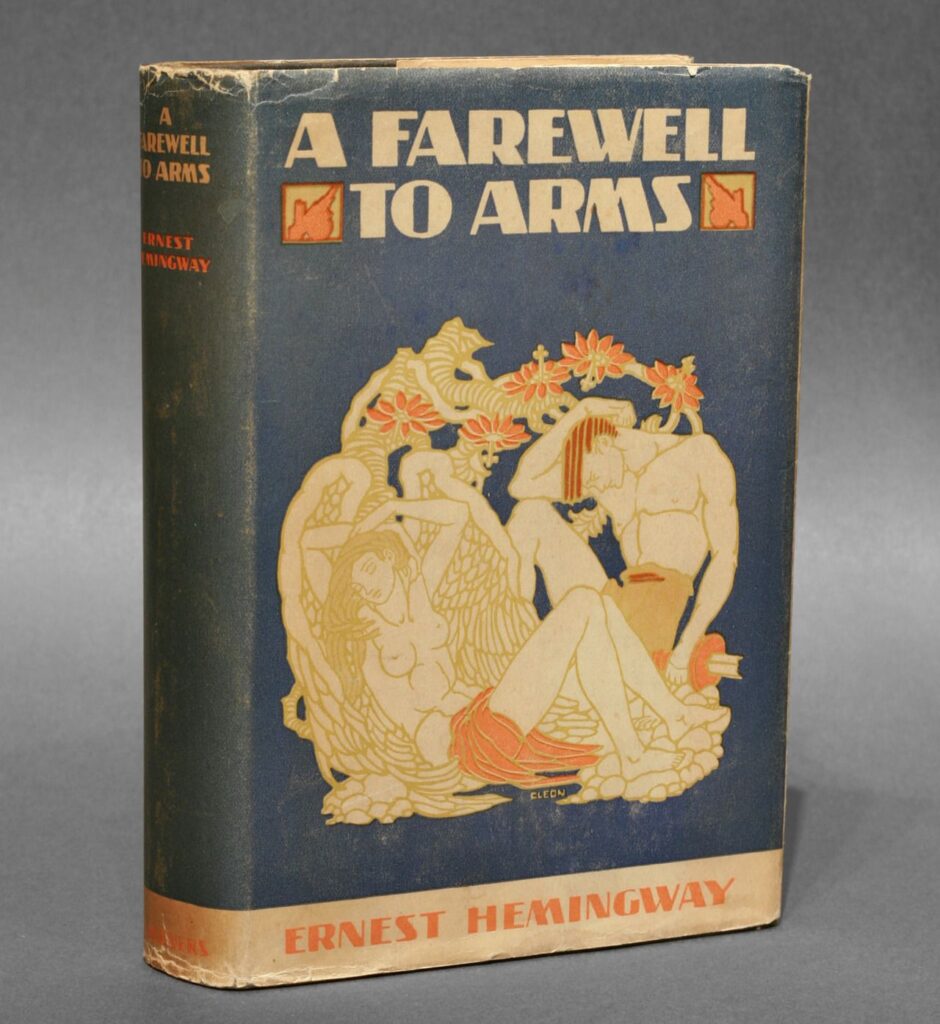
When Frederic arrives to Milan, he is told by two doctors that it will take six months to operate on his knee.

“Certainly. It’s a question of time I could not conscientiously open a knee like that before the projectile was encysted.” (84)

 He insisted on getting another opinion from Dr. Valentini, who agreed to do the surgery the next day. Frederic healed fine and was progressing well after his operation. I felt like when I read this part, it reminded me of when Paul from All Quiet, was at the hospital and the doctors were experimenting with the wounded soldiers. Waiting the six months could alter the entire book and story line drastically.

Question 1:

In Frederic’s scenario, do you believe the doctors we’re experimenting to see how he would do? Or was their argument genuine as to why he had to wait six months?

During the second portion of our reading for A Farewell To Arms, most of it is centered around when Frederic is at the hospital in Milan. Catherine is a nurse at the hospital Fredric is at, so we get more dialogue and scenes of the two and we read their relationship getting more serious. Early in the book Frederic lies when discussing with Catherine about loving her. As time goes on, he does genuinely fall in love with her. As their time in Milan progresses marriage is discussed a few times.

“We said to each other that we were married the first day she had come to the hospital, and we counted months from our wedding day. I wanted to be really married but Catherine said that if we were they would send her away and if we merely started on the formalities that they would watch her and would break us up.” (99)

I understand that there could be rules regarding relationships, but it is strange that Catherine would not want to be married even if they tried their best to keep it a secret. As we know, Catherine was previously married. Again, there decisions around marriage would alter the book, especially if Catherine were to be taken away.

Question 2:

Is Catherine concerns of getting married stemmed from her previous marriage? Did Hemingway do this strategically to show that Catherine could be afraid to marry again?

Throughout part one and two I get annoyed with Catherine’s actions. She reminds me of a young high school girl in love with a senior jock. There isn’t much context that describes how her previous marriage was but she comes off as someone who just wants to be loved. She often does any and everything that Frederic wants.

“I’ll do what you want and say what you want and then I’ll be a great success won’t I?” (92)

“I want what you want there isn’t me anymore just what you want” (92)

“Don’t you think Miss Barkley ought to go off night duty for a while? She looks awfully tired. Why does she stay on so long?” (95)

Catherine only stayed on night duty because Frederic asked her. There are many things he asked for and she does immediately.

Question 3:

How do you think her willingness to do what Frederic wants connects to her character development? Do you believe there be much growing or development at all for her in the next part?

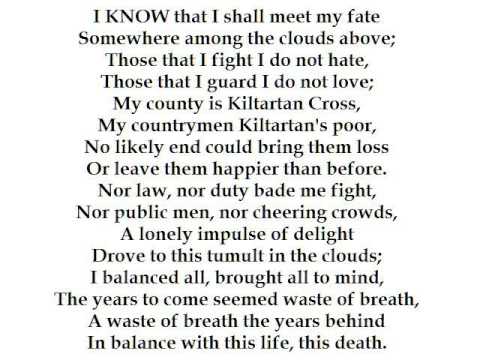
“An Irishman Foresees His Death” – W.B. Yeats

In today’s class I mentioned a poem that reminded me of the idea of ‘doing it for your county’ and not, ’doing it for your country’. The poem was one I remembered really enjoying but had unfortunately forgotten the name of; thank you professor Scanlon for reminding me! But I wanted to share the poem for anyone who was interested or if anyone just enjoys poetry in general like myself.


Although there are very different circumstances between the two soldiers, one from England fighting for Britain and the other from Ireland fighting for Britain, they share the same love for their close knit communities over the whole of Britain or Ireland. We have sort of seen the opposite of this love for home this semester with Paul etc. but I just enjoy this poem from an Irishman’s perspective as an Irishman myself.

~ Reece Anderson

The Great War Poets – Sassoon

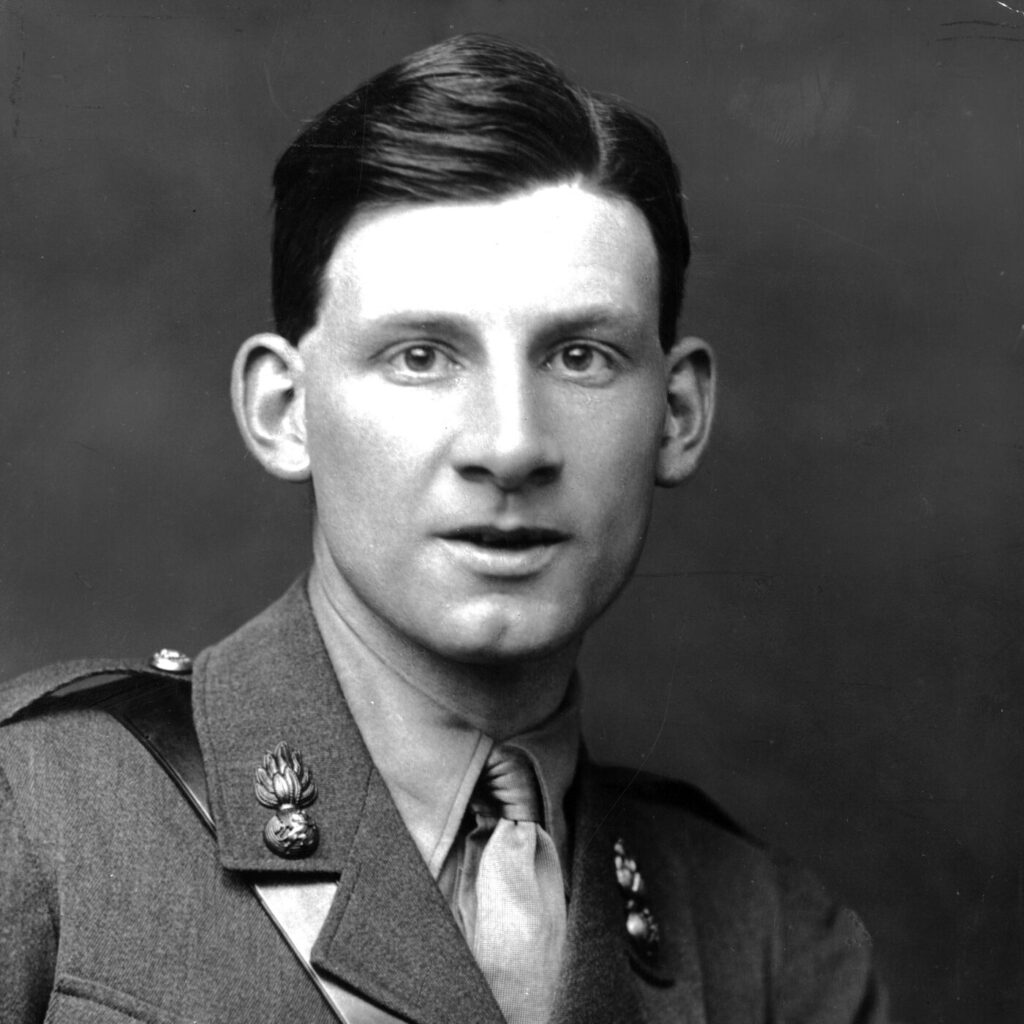
https://media.npr.org/assets/img/2014/08/01/3351190_sq-12ec10203d781ea6418ab8974132c8b165a40ec8-s1400.jpgEnglish poet and author Siegfried Sassoon (1886-1967) wearing his army uniform. His experiences in the First World War resulted in his hatred of war, which he expressed in much of his work.

Sassoon wrote his scathing letter criticizing the war in June of 1917 – see link below:

https://en.wikisource.org/wiki/Finished_with_the_War:_A_Soldier’s_Declaration

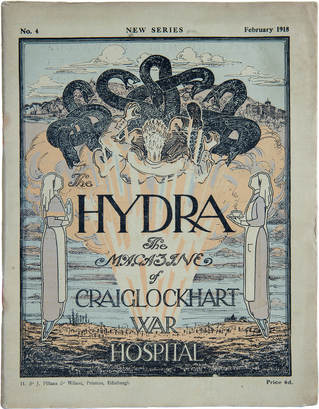
Sassoon’s letter was forwarded to the press and read allowed in the House of Commons. This letter was seen by some as treasonous and Sassoon was lucky he was not executed. Instead Sassoon was sent to Craiglockhart War Hospital where officers with shell shock would convalesce. Sassoon met fellow patient Wilfred Owen and encouraged him to write poetry. The hospital’s monthly publication, “The Hydra”, contains some of Sassoon’s work. It offers an interesting record of life at the hospital in 1917–18, having been produced by the officers who were being treated there. Sassoon (1886-1967) would live to be 80 but Wilfred Owen was killed at the age of 25 just one week before the Armistice.

https://www.napier.ac.uk/~/media/images/war-poets/01403912_320x410.png?la=en&hash=79F176FBE784B7A9B6D7E183E541F72131CFD6DE

See Link below for free online access to this rare and interesting look at the writing talent of the “Lost Generation.”

https://www.napier.ac.uk/about-us/our-location/our-campuses/special-collections/war-poets-collection/the-hydra

Bonnie Akkerman’s Reading Questions for Tuesday 2/15/22 – A Farewell to Arms – Book One (Pages 3-67)

https://i.pinimg.com/originals/fa/fd/b7/fafdb7f26881be3e37d91cab680c66af.jpg

Question 1

“In the late summer of that year we lived in a house in a village that looked across the river and the plain to the mountains. In the bed of the river there were pebbles and boulders, dry and white in the sun, and the water was clear and swiftly moving and blue in the channels. Troops went by the house and down the road and the dust they raised powdered the leaves of the trees. The trunks of the trees too were dusty and the leaves fell early that year and we saw the troops marching along the road and the dust rising and leaves, stirred by the breeze, falling and the soldiers marching and afterward the road bare and white except for the leaves.” – A Farewell to Arms pg. 3

This beautifully written first paragraph uses the word “the” 24 times. Hemingway’s language, although simple, has a way of conveying information with distinct visual impressions. Please examine the paragraph and list the things Hemingway has imparted to the reader in this vivid classic opening. What is your impression of Hemingway’s unique straightforward writing style?

Question 2

Hemingway uses the natural occurrence of rain as symbolic. Examine his use of rain in book one of the text. What does it stand for? Can you identify any other references to nature that also might contain a deeper meaning? What is your interpretation?

Question 3

How does Hemingway convey his personal views of this war in Book one? Please share some textual examples (with page numbers) to “back-up” your answers.  

Bonus questions:

A-Hemingway waits until chapters six and seven to reveal Lieutenant Frederic Henry’s full name. What does this tell us about how Hemingway views our protagonist?

B-Hemingway likes his dichotomies. Have you found any in book one of A Farewell to Arms? What is he trying to convey?

C-Frederic and Catherine declare their love for each other then abruptly acknowledge it is just a game. (26-27) What is Hemingway saying about the nature of wartime romances?

Hemingway – “And the hour… produced the man.”

-P.G. Wodehouse

https://karsh.org/wordpress/wp-content/uploads/2016/10/Yousuf-Karsh-Ernest-Hemingway-1957-1558×1960.jpg

Hemingway is a favorite of mine so in January I signed up for next week’s reading questions. I have read several of his works and my favorite is A Moveable Feast. I think it is the ultimate relaxing read. He tells us all about life in Paris in the 1920’s. One of things I love so much about Hemingway’s work is how he takes the mundane in our daily lives and captures it so vividly with words that “life becomes art.”

Ken Burn’s did a great job with his three part documentary that explores Hemingway’s fascinating life. If you have a way to access PBS, it is well worth watching.

https://www.pbs.org/kenburns/hemingway/

Daniella Colón’s Reading Questions for February 10th, 2022

1) Many of Sassoon’s poems revolve around the experience of death in ways that are figurative and literal. From the sullen and straightforward nature of How to Die, to the intensifying nature of Counter-Attack, Sassoon’s attempts to give multiple portrayals of death through several perspectives in these collective poems. Compared to the likes of All Quiet on the Western Front and Not So Quiet, how are these themes portrayed differently through the use of poetry compared to the format of a novel? Is there a similar impact to be found?
2) The generals of Sassoon’s works are written to be far more flawed compared to the works of Smith and Remarque; works such as Base-Details and The General give distinct characterization, whether it be through a first-person perspective, or by the addition of dialogue to these pieces to give further contextualization to these individuals. Do these tactics enhance the effectiveness of Sassoon’s portrayal? How do they affect the tone of Sassoon’s works, along with his portrayal of war?
3) The Poet As Hero is written to be far more reflective and self-aware compared to his other works. Although it can be inferred as a message directed towards the reader, Sassoon’s words gain far more weight with the implication of his first-hand experiences of fighting for Britain in World War 1. He directly states how he once “sought the grail,” directly referencing his involvement in the war, and being told that his youth “rose immortal semblances of a song.” Yet, in the final stanza, he states that despite how his views have changed, Sassoon says that “there is absolution in my songs.” How does this collection of his poems back up this statement? How do the themes presented represent the changes discussed in The Poet As Hero?

Group Work Reflection, Mrs. O

We shared a few interesting perspectives on the mystery surrounding Mrs. O’s death at the end of “Mrs. Ogilvy Finds Herself.” Mari brought up an interesting point about reincarnation and the possibility of Mrs. O reliving different elements of a previous life. I personally did not think about this during my first reading, however, as we talked more about it I thought that that was a very valid interpretation. We did have a bit of debate about how it is that she died in this cave and the significance of how she got to the area where they found her body. The point of her hands being constantly in her pockets caught my attention, as walking with your hands in your pockets can be extremely dangerous if you were to fall or trip as it prevents you from being able to effectively brace yourself from encountering serious harm. I definitely interpreted her death as more of an accident rather than a suicide, though it did not surprise me that she was dead at the end of the story. Perhaps she was having some sort of out-of-body experience, and when she was jostled in her flashback/ dreamlike state she startled herself. With her hands being in her pockets as she fell in the cave she was unable to properly brace herself or do anything to prevent her peril. If we were to follow along the interpretation that Mrs. O is having some kind of connection to a past life, I wonder if the moment that the women in the flashback is experiencing a physical altercation where the man rapes her, if that were to be the moment when Mrs. O’s physical body was experiencing strife. If at this moment where she in her vision/flashback, is enduring rape that she is physically falling in the cave, as if she were unable to control her literal body while her mental presence is in another place. Overall, I thought that the group work was really beneficial. It was interesting to hear others interpretations of the short stories in a more personal conversation. 

Sonia Joshi’s Review of The African Queen

[1]

Released in 1951, The African Queen stars Humphrey Bogart and Katharine Hepburn. Before the story was brought to life on the big screen, it started out as a novel of the same name by C.S. Forester. His novels were centered around stories of naval warfare, most notably during the Napoleonic Wars and both World Wars (one of his other famous novels, The Good Shepherd, was adapted into a 2020 film called Greyhound starring Tom Hanks). However, Forester was arguably most famous for his 12-part Hornblower series, all of whose stories were based on real events during the Napoleonic Wars [2].

The film revolves around Rose Sayer (Hepburn), a British Missionary who has gone to Africa with her brother, Sam (Robert Morely) to bring Christianity to a village. However, deep into their residency, World War I begins, and a group of German soldiers raids the village and takes every local person prisoner. All this leads to the death of Rose’s brother, motivating her to try and go to safety with the help of boatman Charlie Allnut (Bogart). The majority of the conflict comes from the pair’s attempts to navigate the rough and wildlife-filled Ulanga River on the titular boat, so although there is a backdrop of war in the movie, it would not technically be considered a war film.

Impressively, about half of the film was shot on-location in Africa, with both Uganda and Congo serving as the backdrop. This covered most of the land scenes, as those were deemed the safest to film there, though several of the cast members fell ill, allegedly from drinking unsafe water. Anything on the river was shot at Isleworth Studios in Middlesex [3]. However, that does not in any way detract from the impressive set pieces and use of green-screen images. Of course, by today’s standards, the technology is quite outdated, but for 1951, the blending of added image and the actors in front of the green screen is quite smooth. All other effects appear to be practical, which is incredibly commendable considering there are shots that involve massive and wide-spread fires, explosions, and even a live leech.

Both Hepburn and Bogart give memorable performances, and help give their characters distinct personalities. Apparently, improvisation, particularly from Bogart, was encouraged during dialogue, which definitely helped contribute to Rose and Charlie’s entertaining cracks at each other and banter. Both actors also helped make their characters incredibly distinct. Everything about Rose, down to her posture and micro expressions, is buttoned-up, ladylike, and even judgmental at times. Meanwhile, Bogart swings his arms wildly, speaks loudly, and almost always wears an overly-enthusiastic smile, perfectly encapsulating Charlie’s carefree nature. While The African Queen‘s other actors are good as well, none of them are in the movie long enough to make a fully sound judgement on their abilities as actors.

However, all of this doesn’t mean the film isn’t a product of its time. Primarily, the issue of gender roles stands out. Although Rose sometimes demonstrates that she’s both smart and strong, she often falls into a damsel in distress role, screaming and begging for Charlie’s help to get her out of an unpleasant situation. Despite that, her character is fun and, as previously mentioned, proves quite useful throughout the movie.

Overall, The African Queen is an entertaining watch. It’s packed with action, with one thing happening after the other, witty dialogue, and even a bit of endearing romance. If you’ve got 100 minutes and want something exciting to watch, it’s definitely worth the time.

[1] Image from https://www.amazon.com/African-Queen-Katharine-Hepburn/dp/B002TOL4QO

[2] To see more about Forester’s works, https://www.britannica.com/biography/C-S-Forester

[3] For more information, see https://www.britannica.com/topic/The-African-Queen-film-1951

Katia’s Reading Questions for February 10th

  1. “Repression of War Experience” is one of now several portrayals we’ve seen of a narrator struggling with mental health in relation to the Great War, but it’s the first we’ve seen in metered poetry, as opposed to Smith and Aldington’s prose. How does the existence of meter as a force that structures the poem interact with the narration of the post-war mind, which is arguably a fundamentally unstructured thing? How might the change in form from prose to poetry impact a reader’s experience of this subject? 
  2. “The Redeemer” and “Christ and the Soldier” both portray men who appear to be Jesus Christ in contact with the war, but the two portrayals are very distinct. Notably, the symbology of the crown of thorns is explicitly divergent between the two. What kinds of differing or parallel images do the two poems paint regarding Christ in relation to soldiers and the Great War? How might this tie into Sassoon’s more overarching views on England, or on religion? 
  3. Sassoon varies the tone of his poetry and the voices imbedded into it a great deal; the dialogue-centered, sardonic “They” and “The General” exist alongside dense, highly-detailed, visually-oriented narration, such as the voice that narrates “Counter-Attack” and “A Night Attack.” What are the differing purposes or effects of these styles, or other poetic styles Sassoon assumes? Is there a particular advantage (or disadvantage) that one of these approaches might hold in writing about the war for a particular audience?