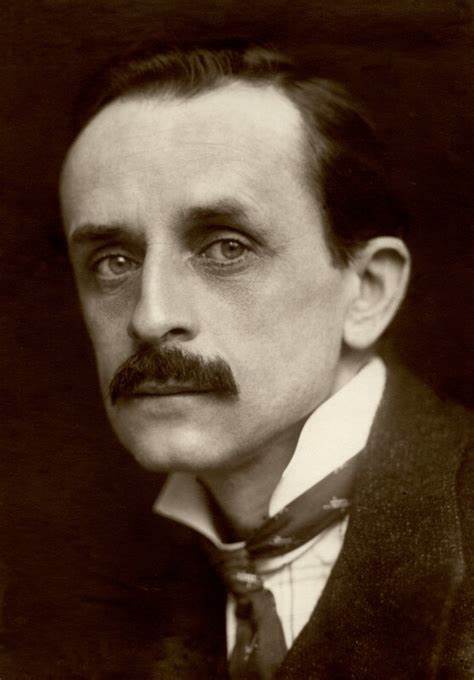
This weeks story “The New Word” was somewhat unique and I decided to do some research into the man who wrote Peter Pan.

This weeks story “The New Word” was somewhat unique and I decided to do some research into the man who wrote Peter Pan.
After reading both All Quiet and Not so Quiet it is clear that the soldiers and workers actually participating in the war physically do not want to be there. However, for the first time, we see in Not so Quiet that there are people who see the war as an opportunity. The lower class women like Blimey who Smithy works with towards the end of the novel need the war for food and money. Smithy says, “It’s a jolly good war and they hope it goes on forever” when talking about Blimey and Cheery (p. 218). I was taken aback after reading this section because I had not thought about how from some peoples perspective the war was personally beneficial. The class differences are at the forefront of this novel and the contrast in perspectives toward the war is interesting to think about.
I know we had an extended deadline, but I couldn’t sleep, so here’s some extra time to answer the questions!
Bonus!
When I started reading the last section of Not So Quiet ... I found Helen’s experience on leave very interesting. Prior to actually being home, she made it very clear that she would not return to war, “I have finished with the war for good” (167). After losing multiple people that were close to her and all the things that occurred while working, it is not shocking that she would want to never return. Helen’s family’s response to her not wanting to return to war is outrageous. We have talked about mother in our previous classes, but the way she immediately wants to show Helen off at a meeting is sad. She immediately questions, “What will Mrs. Evans-Mawnington say?” (182). Mother is not concern whether Helen is physically or mentally okay, she is more concern on what her rival will think. I believe Mother is so caught up in trying to keep this persona up that the actual danger her children are in does not matter.
Aunt Helen is so dramatic in my opinion. She really was going to rewrite her will if Helen did not enlist again, which is so sad. I am sure Aunt Helen, as well as mother, knows about the hardships that come with being in the war but obviously for them what is going on at the front lines is not as important as their reputations at the home front. Besides all that her family is saying and threatening to do, Helen still sticks her ground and refuses to go back to war. However, this changes when Trix is in need of help. When Helen helped Trix, that showed true family value. Helen was willing to do the one thing she did not want to do so then her sister could get help. When Helen returns to war, it shows that she has more value in her relationship with her sister then her reputation. Although this makes her aunt and mother happy, she did not do it for them. She did it for Trix, the one person who seems like true family to Helen.

When reading Not So Quiet, there are notable similarities between this text and All Quiet on the Western Front—as we’ve discussed quite a few in class such as the characterization of The “Bitch” Commandment and Himmelstoss as abusive people in power, societal pressures being a factor in driving the POV characters to enlist, and the similar writing style, among other similarities (“I am afraid I am going mad” (P. 101 of my edition) a line that follows the shock of a sudden tragedy where a character dies in the POV character’s arms, and the final ending paragraph are the moments that stood out the most to me while reading Not So Quiet).
Looking further into the history of the author, Evadne Price, I found out that this novel was originally commissioned as a far more blatant rip of All Quiet… following the international success of the latter novel. According to an article by Lucy Scholes of The Paris Review, Price was approached by London-based publisher, Albert E. Marriott, and asked to “write a spoof response about women in the war. He had in mind a title—“All Quaint on The Western Front“—and a pen name for her, Erica Remarks” (emphasis is mine). However, after reading All Quiet herself for the first time, Price felt, understandably so, that making light of such a serious and tragic subject was…y’know, absolutely horrible and insulting (quote from Price herself during an interview with Hazel De Berg: “Anybody who writes a skit on this book wants their brains dusted” (2, around the 14:01 mark). Since Price was never actually a part of the war effort herself,pressed for cash and under the suggestion (and pressure) of Marriott, she decided to base the experiences of the fictional Helen Z. Smith on the borrowed diary entries of former front-line ambulance driver, Winifred Constance Young, who Price had met at the request of a friend. Sadly, Price wasn’t properly compensated for her work by Marriott as detailed in her contract, leading to quite the interesting scandal between the two of them following the successful publication of Not So Quiet among…other hijinks Marriott had gotten up to during that time.
Another interesting detail I found out was that this was actually the first in a series of novels: Not So Quiet was followed by Women of Aftermath in 1931, Shadow Women in 1932, Luxury Ladies in 1933, and They Lived With Me in 1934. These weren’t nearly as successful as Not So Quiet, and I can’t seem to find much information on these books outside of a very brief summary of Women of Aftermath on Goodreads: “A sequel to “Not So Quiet…”. After the war a wife is beaten by her wounded soldier husband” (4). Sadly, they appear to be just as lost as her beloved children’s series Jane Turpin, and like that series, may have gone out of print following their lackluster returns by an audience now gearing up for WWII—the novelty of these types of books seems to have worn off rather quickly during the time, and, according to a paper given at the Marginalized Mainstream conference in 2014 (recorded by the blog Great War Fiction), even Not So Quiet was itself nearly lost before it was rediscovered and reprinted in 1989 by Jane Marcus and Feminist Press respectively (3).
Knowing all of this, how does this information on the behind-the-scenes of Not So Quiet impact your reading of Price’s novel? Does the knowledge of the fact it was initially conceived by as a parody by a man who wanted to cash in on All Quiet’s success change how you read both stories back-to-back as we have in class? How do you think the book would’ve been perceived by audiences of the time (let alone today) if Price had followed through with the parody nature that had been pitched to her—and do any elements of parody still show up in the novel regardless of its shift in direction early on? Are there anymore similarities between these books that we can now point to knowing this context? How does the knowledge that there were sequels to this novel still published under the Helena Zenna Smith pseudonym (and thus, presumably, continued to follow the life of the Smithy character) impact the ending for you guys—does this knowledge cheapen the impact of that final paragraph or does it make it more potent? Finally, how many of you guys wish that there was some kind of biopic about Evadne Price?; because my lord, was this woman quite a fascinating character in of herself.
Sources used in this post:
https://www.theparisreview.org/blog/2019/03/29/re-covered-not-so-quietstepdaughters-of-war/ (1)
//nla.org.au/nla.obj-22278695/listen/2-592 (2)
https://greatwarfiction.wordpress.org/helen-zenna-smith-and-the-disguises-of-evadne-price/ (3)
https://www.goodreads.com/book/show/18070839-women-of-the-aftermath (4)
While I was rereading the section about Skinny and Frost earlier to answer one of Bella’s reading questions, I came across the line“‘No girl attacks another for merely being catty, and Toshington is not the catty type’”(128) Tosh repeats from her meeting with Mrs. Bitch and it made me think in more depth about one of our class discussions. The word “catty” is interesting to me as I think of it as something purposefully and unnecessarily mean, which I think actually describes Mrs. Bitch quite well. I would like to take this word out of this scene and apply it to the more general problems with Mrs. Bitch in the book, specifically where she herself crosses the line between strict and catty. She is absolutely awful throughout the book, so it is hard to figure out where exactly she is a strict, strong leader and when she is just cruel. Dr. Scanlon mentioned in class that our sections had very different interpretations of Mrs. Bitch; my section(2:00) put her in a broad context and examined why she had to act the way she does, but Dr. Scanlon said the 12:30 section absolutely hated her. While there are a lot to choose from, can anyone point out the one thing she says or does which pushes her completely over the edge and makes her unredeemable? If you are on the other side of thought about her, is there a specific moment you can pick which leads you to believe she is better than we think or is it more about what we know about how difficult that era was for women in power?
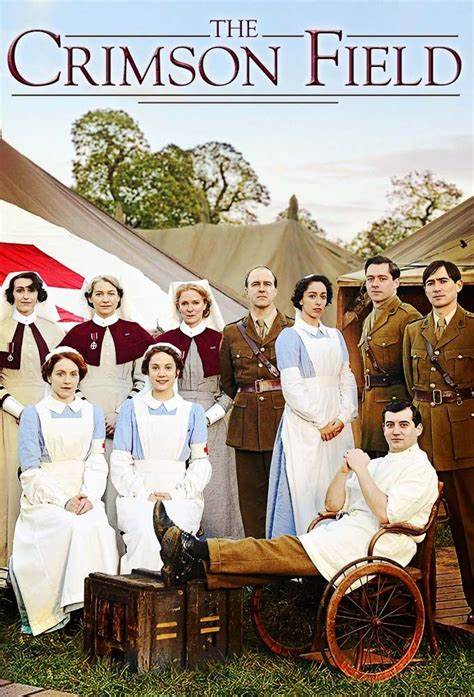
This series depicts WWI nurses and the challenges they faced. As I watched it again this weekend, I was struck how many of the its characters remind me of the VAD nurses in Not So Quiet. If you have a PBS Masterpiece subscription, it is a featured selection. Incidentally, the main character, Kitty Trevelyan, is played by Oona Chaplin who is the granddaughter of Charlie Chaplin.