
Despite the unimaginable horrors of war being described in minute detail in this chapter, I felt this chapter was easier to read than others due to its story format. I could not take my eyes off of the book because the bombardment and attacks scenes were so well described. For example, “The front is a cage in which we must await fearfully may happen … Over us, Chance hovers… It is this Chance that makes us indifferent. It is just a matter of chance that I am still alive.” (101). I just wanted to touch on the one part of this chapter that was the most powerful to me as I feel we overlooked it in class. This is the feeling of release that Paul and his company get when they are finally able to attack. Due to the long and grueling bombardment the german soldiers are driven insane. It’s sad to think anything could possibly make one want to take someone else’s life, but war has turned these men into “wild beasts” (113). The feeling of release is the most powerful part of this chapter to me because it truly illustrates just how horrible war really is. Men who previously had never killed before were suddenly driven to the point of insanity where killing other men was satisfying. Do you think anything other than war could drive someone else this insane into the point they turn into wild beasts?
“Words, Words, Words—they do not reach me.”
Paul says this about the books on his shelf at home (173), buttttt I am really excited to track it as a major theme throughout the book. The inadequacy of language is something we continuously see Paul struggle with, on the front and at home. At the front: “Attack, counter-attack, charge, repulse — these are words, but what things they signify!” (129). And “Bombardment, barrage, curtain-fire, mines, gas, tanks, machine-guns, hand grenades — words words, but they hold the horror of the world” (132).
At home, though, this struggle is emphasized. We can see clearly that Paul is split between these two worlds—the western front and the home (or lack thereof) front. I know we talked at length about this in class, but I wanted to bring it to the blog. To me, It was one of the most compelling sections in this week’s reading. When Paul’s mother is saying goodnight to him, there is a clear division between what Paul wishes he could say and what he actually says. All of it is terrible and heartbreaking and so sad I am once again nauseous reading it, but to just pull one example, take this exchange: “‘And be very careful at the front, Paul.’ Ah, Mother! Mother! Why do I not take you in my arms and die with you. What poor wretches we are! ‘Yes Mother, I will’” (183).
UGHHHHHHHHH
In the 12:30 class, we used this passage to start to generate a list of ways Paul is split, or broken in two. We have: parent (specifically mother) Paul vs. child Paul, maternal vs. violent Paul, and broken vs. performative Paul. Maternal in the sense of pretty consistently thinking of others and caring for them before himself. And performative meaning that Paul performs this calmness as a way to protect himself and those he loves from the broken madness he really feels.
I’m wondering (hoping, PLEASE) if anyone wants to add to/expand on this list of Broken (to use Bonnie’s word) Paul. How else is he broken? What are other ways we can map this conflict in Paul? and bonus: how does language complicate these divisions?
Jacob’s Reading Questions for January 25th
1. Earlier in the novel, we see descriptions of hundreds of men’s deaths. In chapter 9, Paul and his fellow men discuss the causes of the war, with some pointing out the oddity of both sides appearing apprehensive to conflict (why then is there war?). In what way does this dialogue between Paul and the other men establish the fruitlessness of the war?
2. During the hospital scene in chapter 10, Paul spends the vast majority of his time bedridden and without much agency. His only window into what is happening in the rest of the hospital is the room he and his fellow men reside in. How do the author’s descriptions during this period help the reader experience this claustrophobic, intense set of events?
3. Despite much of the chapter featuring elaborate descriptions and intense feeling, the last few sentences of chapter 10 are cut short. There are many events that take place between Lewandowski’s wife’s visit and Paul’s injuries healing, such as the leave granted to Paul and the worsening of his mother’s condition. Why do you think these events were summarized in favor of his return to the front?
Some songs about the Great War
Something I thought would be good to share are some songs from/about the Frist World War that have affected me in one way or another.
The first song is “Johnny I Hardly Knew Ye,” a song about an Irish veteran returning home from the home, missing both physical and spiritual parts of himself as he’s completely run down by the war. It ends on the theoreitcally optimistic note that, although he’s missing an arm, a leg, his innocence, and will likely be begging for food for the rest of his life; he still is alive, so that’s something.
The second song is a reading of “In Flanders Fields,” probably the most famous poem of the War. The poem itself probably needs no introduction, but here is a link to it regardless.
The third song is “Wo alle Straßen enden,” a song disputedly attributed in part to a German soldier in WWI, although I feel like it hits the feeling of utter hopelessness quite well. A very fitting song for All Quiet on the Western Front, as it describes this hopelessness from a German perspective with the knowledge of the impending losing of the war in mind.
The fourth song is “Green Fields of France,” a Scottish folksong written in the 1970’s about the narrator considering the grave of a soldier who died in 1916, and wondering if the soldier left anyone behind when he died or if he was properly honored. The narrator then starts wondering if the war was fought for anything at all.
The fifth and final song I wanted to share in this post is “And the Band Played Waltzing Matilda,” and it’s one of my favorite songs about the war and a song that almost always make me cry. It’s a play on the classic ANZAC (Australian and New Zealand Army Corps) song Waltzing Matilda, a song played often in the ANZAC army bands and a marching song of the era. And the Band Played is hardly about the original subject matter of Waltzing Matilda, as And the Band Played focuses on the experience of an Australian Conscript sent to fight in the meatgrinder of a campaign known as Gallipoli. Eventually, this conscript return homes short a leg, with nobody to go home to and considers how pointless the whole war was. Waltzing Matilda is used to help the theme of being lied to by those in power to die in this war. To make it short, it’s a very good song.
I hope you all enjoy (or maybe that’s not the right word) these songs and get something out of them. I’d love to know y’alls thoughts on them!
Bonnie Akkerman’s review of “Paths of Glory” (1957)

The film Paths of Glory is based on a 1935 book by Humphrey Cobb. Cobb (1899-1944) an Italian-born, Canadian-American screenwriter and novelist had served in the World War I Canadian army at the age of 17. Cobb kept a wartime diary and utilized his recollections when writing Paths of Glory.[1] His disgust and disillusion are heavily reflected in the work. The title of the novel comes from Thomas Gray’s 1751 poem Elegy Written in a Country Churchyard. Paths of Glory is based on the Souain corporal’s affair that occurred on March 17, 1915. The choice to set the novel within the French army was purposefully done by Cobb as he felt they had been “poorly led” by commanders and were needlessly slaughtered in futile quests for small patches of territory.[2] The “ant-hill” mentioned in the film is called “the pimple” in the novel.
Kirk Douglas gives a stellar performance in the 1957 film as Colonel Dax. Stanley Kubrick, who would go on to become an acclaimed director of such films as “The Shining”, directs. Douglas’ 1988 bestselling autobiography, The Ragman’s Son, tells how he felt so moved by Cobb’s book that he provided thousands of dollars out of his own pocket to support the project. Kubrick, Jim Thompson, and Calder Willingham were all screenwriters working on the project which re-wrote the character of Colonel Dax with Douglas in mind. The novel has Dax as a minor character that equivocates in his support of the men but the film does not. The novel also includes Colonel Etienne, who is the legal representative for the accused. Kubrick’s script eliminates him entirely. Another interesting fact is that Kubrick and his writers instigated further changes that had the film ending happily. The “happy-ending” script was vehemently rejected by Kirk Douglas which caused conflict with Kubrick. Douglas is said to have yelled: “I got the money based on the original script. Not this shit. We’re going to do the original script or we’re not making the picture.”[3] Douglas’ determination to portray the harsh reality of an injustice pays off in the emotionally charged finale which evokes tremendous empathy.
Adolf Menjou, the actor who plays General Broulard, was himself a World War I veteran and had misgivings about portraying the effete officer. George Macready, playing the part of the sinister General Mireau, actually had a severe facial scar from an automobile accident while still in college. Macready’s badly damaged face was stitched by the only available medical practitioner, a veterinarian. The only female actress in the film is Christiane Harlan, a German singer and dancer who later became the third wife of Stanley Kubrick. They remained married for 40 years until his death in 1999.
The film was shot in Munich in just 64 days and cost less than one million dollars to make. The choice to shoot this film in black and white enhances the main themes of despair and desolation. Paths of Glory was released in October of 1957 and enjoyed only moderate success in the United States. The most interesting thing about this film is its enduring message. The film has become a classic in its depiction of the ineptitude of French high command and the sacrifice enlisted men were expected to make without question. The mutinies of French soldiers in May of 1917 after the disastrous Nivelle Offensive are an example of the average soldier’s response to the incompetent military bureaucracy that was French high command. The film would be almost comical if it were not historically accurate. Instead Paths of Glory is heartbreaking.
Works Cited
Cobb, Humphrey. Paths of Glory. London, Penguin, 2011.
FOOTNOTES
[1] Humphrey Cobb, Paths of Glory (New York: The Penguin Group, 2010), xxv.
[2] Cobb, Paths of Glory, xx.
[3] https://www.military-history.org/articles/war-on-film-paths-of-glory.htm
I pledge……….
Ella’s Reading Q’s for 1/25 (Ch. 6-8)
- In this section, Paul receives leave and is finally able to return home and visit family. However, as we read, Paul does not have the sense of relief that would be expected. He does not feel ‘at home,’ and is instead bothered by people’s questions or assumptions about the war. For example, “Some of these people ask questions, some ask no questions, but no one can see that the latter are proud of themselves for their silence” (168). How is quiet represented in the novel? Why is quietness “so unattainable for them now?” (121)?
- In class we have discussed the juxtaposition between the beauty of nature with the horrors of war. For example, “One morning two butterflies play in front of our trench…They settle on the teeth of a skull” (127). What does nature symbolize in the novel? Is there any repetition of particular animals or landscapes, and what do they represent?
- What is the relationship of time in the novel? Does Paul live in the present moment, or is he often revisiting memories from the past?
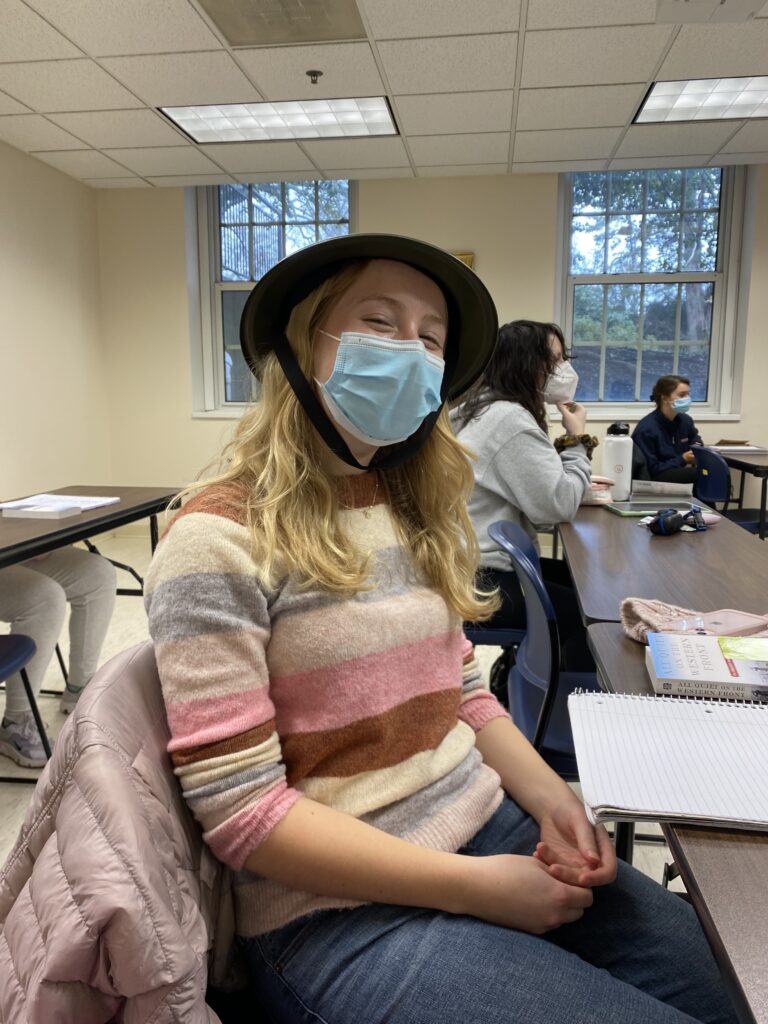
All Quiet on The Western Front by Erich Maria Remarque Chapters 6-8 Reading Questions
In the first few chapters of the novel, Himmelstoss is a terrible leader to Paul and his remaining soldiers. However, after experiencing the horrors that he witnessed during chapter 6 and also being a coward during the fighting, Himmelstoss tries to regain the trust of his fellow soldiers. Paul and his friends more or less forgive him. However, if Himmelstoss knew that Paul and his friends were the ones that beat him up previously, do you think he would be so desperate to earn back their trust? Why or why not?
In chapter 7, Paul is given leave and goes back to his hometown. In the novel, Paul describes himself being a “stranger” in his own home. While he is happy to see his parents, at the end of the chapter he wishes that he didn’t come back home. As it will be even harder to say goodbye and to go back to the front lines. If you were Paul, would you go home and see your family, maybe even for the last time, or would you go somewhere else on your seventeen days of leave?
In the beginning of chapter 8, Paul returns to the front lines only to see captured Russian soldiers looking through garbage for food. Paul remarks that these men he was looking at were the enemy. These men with “honest peasant faces” as Paul says. He sees no difference between them or himself. Even after all Paul has been through and has seen these men, do you think he believes in the war anymore? Do you think he’s still has the “spirit” to continue fighting for his country?
Voices of The Great War

The trauma of World War I impacted people from all walks of life and left lifelong scars on many. How people handle the trauma of a global conflict is a highly personal experience with varied responses and long term implications. For many survivors the process of writing down their individual experiences proved to be quite cathartic while others chose to depict the horrors of this conflict in fiction. Whether in fiction or factual account, the literature of The Great War provided future generations with a wealth of information. These works enable us to form a greater understanding of what the world would come to call “The War to End All Wars.”
The treasure trove of written information left to us about this fundamental moment in history is memorabilia we can all cherish. It serves as a reminder that:
“Those who forget history are condemned to repeat it.” -George Santayana, The Life of Reason
Here is a link to Goodreads comprehensive list of “must read” WWI texts:
Enlist
100 years ago, at the start of 1922, much of the world was still trying to process what had come to pass in the prior eight years: the mobilization to war of Europe, North America, some of the Middle East and Central America, and several nations of Asia, as well as many colonized peoples of South Asia and Africa; the harrowing of the European landscape along the war’s two primary fronts, especially the Western Front: the rise, fall, and redefinition of nation states, boundaries, and empires; the development and activation of killing technologies like the machine gun, the tank, the flame thrower, and poison gas; the slaughter and physical or psychological maiming of some 41 million people; the displacement of approximately 10 million people as refugees; in Armenia, the first major genocide of a genocidal century; and, just as combatants moved toward peace, the death of an estimated 50 million people worldwide in the brutal influenza pandemic of 1918-early 1920.

How did the humans of that time experience and record their experiences in this fundamental moment of modernity? How does our own distance both enable and hamper our understanding of that experience, and what do we learn from The War to End All Wars? I hope our semester is the beginning but not the end of your work considering those questions.