
Category Archives: Uncategorized
Bear With Me While I Make A Taylor Swift Reference
I’ve been thinking about what war and pandemic mean together as I’m working on my Porter essay, as well as thinking on my own personal experience with the pandemic. For me, much of 2020 is set to the soundtrack of Taylor Swift’s album, folklore. If you aren’t familiar with the album, I want to encourage you to listen to her song, epiphany. It explores the parallels between war and illness, and reminds me of our own conversations.
Keep your helmet, keep your life, son
Just a flesh wound, here’s your rifle
Crawling up the beaches now
“Sir, I think he’s bleeding out”
And some things you just can’t speak about
With you I serve, with you I fall down, down
Watch you breathe in, watch you breathing out, out
Something med school did not cover
Someone’s daughter, someone’s mother
Holds your hand through plastic now
“Doc, I think she’s crashing out”
And some things you just can’t speak about
Only twenty minutes to sleep
But you dream of some epiphany
Just one single glimpse of relief
To make some sense of what you’ve seen
With you I serve, with you I fall down, down (Down)
Watch you breathe in, watch you breathing out, out
With you I serve (With you I serve), with you I fall down (Down), down (Down)
Watch you breathe in (Watch you breathe in), watch you breathing out (Out), out (Out)
Only twenty minutes to sleep
But you dream of some epiphany
Just one single glimpse of relief
To make some sense of what you’ve seen
It also reminds me of the conversations we didn’t quite have. For those of you in the 12:30 section, I want you to recall Carleigh’s reaction when Professor Scanlon brought up March of 2020. And how Professor Scanlon apologized to her for even bringing it up. “Some things you just can’t speak about.” I find that at the end of this class, this song adds something valuable to my own modern interpretation of events not yet that outdated. Honestly, I could parse the ways this song relates to our class conversations for hours, but I’ll spare you that.
And now, because I’ve already namedropped Carleigh once in this post, I’m going to do it again. Sorry, Carleigh. She also mentioned in our final class today how her view of truth in literature has shifted, and how several of the works in this class have asked us whether objective truth is really more important than personal truth. To that end, I’d like to share with you part of the introduction to this album –
“A tale that becomes folklore is one that is passed down and whispered around. Sometimes even sung about. The lines between fantasy and reality blur and the boundaries between truth and fiction become almost indiscernible. Speculation, over time, becomes fact. Myths, ghost stories, and fables. Fairytales and parables. Gossip and legend. Someone’s secrets written in the sky for all to behold.”
I don’t think it matters to me what was “true.” Pale Horse, Pale Rider is a work of fiction, but I think it is far more honest to Porter’s experience than if some omnipresent observer handed us a list of events in her life from before her experience with the flu through her recovery. Why should truth in that form be any more true than what Porter knows of her life?
Anyways, this post is my way of fighting off the urge to write about Taylor Swift in my Porter essay. Thanks for reading!
What did you like most in class?
I know that the professor asked this in class but some classmates are pretty shy and do not answer in front of other classmates and rather respond online. What did you like most? What text spoke to you the most? Why did it speak to you? What did you learn? After finishing this semester do you feel like you learned more or less than before this class?
Thoughts on “Dulce et Decorum Est”
Since I missed the class discussion on Wilfred Owen’s “Dulce et Decorum Est” I wanted to share a couple of my thoughts on this incredible piece. This poem is one of the main works people think of when World War One literature is brought up because it draws the audience into the experience of war. The fast pace has always struck me because it is remarkably disorienting and anxiety-inducing. Alliteration like “Knock-kneed, coughing like hags, we cursed through sludge,” and consonance with the repetition of “ing” throughout the poem, but particularly with “guttering, choking, drowning” almost takes the audience’s breath away as the soldiers are struggling to breathe. The idea of a lack of breath continues as even his dreams about the horror is “smothering.” Owen engages all of the senses to depict the horrific experience of being on the front, but to fully appreciate them I think the poem needs to be read more than once. The first time everyone reads the poem, they of course focus on the striking words “Gas! GAS! Quick, boys!” but on this reading of the poem I found myself noticing more of the ways he focuses on loss of senses, such as “deaf even to the hoots/Of gas-shells dropping softly behind.” As the poem nears the end, the pace slows a little and the most notable aspect becomes the bitter tone in the final stanza. The speaker addresses the audience directly; he does not blame some higher power or government for what happened, but rather each and every person who allows the war to happen. “If in some smothering dreams, you too could pace/…My friend, you would not tell with such high zest” is slower than the early stanzas and vividly creates a harsh tone meant to cause guilt and point out the injustice which occurred. Beyond the stylistic excellence Owen displays, his powerful word choice is to me what really makes this poem a masterpiece. Any poet could have used alliteration or written with a fast pace, but the word choice sets individual poets apart. Language like “An ecstasy of fumbling,” “like a devil’s sick of sin,” “under a green sea,” and the entirety of the last three lines are what makes this poem relentlessly stick with me every time I read it. Poetry, especially when written by brilliant minds like Wilfred Owen, seems to me to be an even more effective way to describe the war experience than novels because people did not get the chance to read a plot synopsis on the back, read an introduction, or have an exposition to war. From nurses to ambulance drivers to soldiers to those on the homefront, everyone was thrown into something they were not prepared for. Have you guys been more moved by the poetry or the novels we read? (I know it’s hard to pick they are both impactful in their own ways, just curious if anyone does have a preference!)
An Only Son by Rudyard Kipling
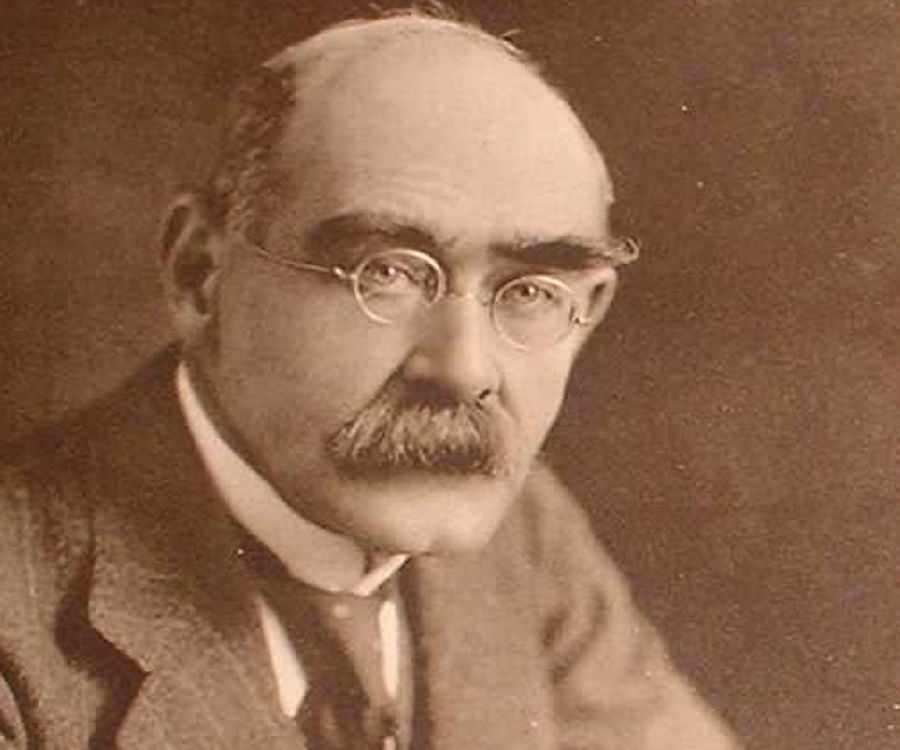
https://youtube.com/shorts/MivFHVy4SoQ?feature=share
Final poetry project
Yet Another Way Women Were Involved in The Great War
I was watching the Netflix show The Defeated about Post WWII Berlin and an untrained police force in the American sector(pretty graphic show, but really good and for fans of Friday Night Lights it stars Taylor Kitsch aka Tim Riggins) and the captain of the new police station is a woman. The depiction of her breaking barriers made me interested in how many women were involved in this kind of work during the first World War. In both our readings and the special missions, we have seen how women served as nurses, VAD’s, on the homefront, and even as soldiers, but I found some interesting information on female spies in the war to expand on what Bella talks about in the Darling Lili movie review. I read a transcript of an interview of Tammy Proctor, author of Female Intelligence: Women in Espionage in the First World War. In the interview, Proctor discusses Mata Hari, Edith Cavell, “The Lady Doctor,” and Girl Guides’ role in the war. Hari was not an overly successful spy as she did not pass a great deal of information and did not have clear loyalties, playing France and Germany off against one another, but the myths surrounding her are fascinating. After the French government executed her for espionage, rumors like her surviving execution and being responsible for the death of 50,000 men spread across Europe. Hari’s model for spies was followed by Edith Cavell, who was also executed for being a spy even though she was not really a spy. Cavell ran a nurse training school which turned into an escape network for allied soldiers and while some people in this network she created were involved in intelligence gathering, Cavell herself was never engaging in that side. Proctor notes these two women were used to contrast one another, with Cavell as the revered martyr in propaganda and Hari as the treacherous seductress. “The Lady Doctor” seems to have had more success than Hari and Cavell as her identity was never uncovered, at least by the allied soldiers. This mysterious figure is known for her German spy training camp and Proctor explains she represents a slightly different persona than either Cavell or Hair because she is known for being the sadistic and seductive spy.
The part of this interview I found the most interesting was Proctor’s discussion on Girl Guides and their role in British intelligence. The War Office initially hired Boy Scouts to deliver messages, but they were soon replaced by Girl Guides because the young boys were “too difficult to manage.” Girls in this role ranged from ages 14-18, so the war office had children running messages and patrolling to gather intelligence for the M15. These girls, along with the thousands of other women who served in British intelligence during the war, were turned away after the war’s conclusion and prohibited from serving there. Interestingly, the war office purposely hired young women because they hoped they would not ask for permanent positions because they would be getting married and staying at home with their families. Overall, this was a really interesting article to dive into this unique role women played in World War I especially when thinking of it in the context of how their role expanded and grew in World War II.
Works Cited
Smith, Amanda. “Women Spies of WW1…” Radio National, New York University Press, 4 Nov. 2011.

Craiglockhart Hospital
Was really curious about the shell shock hospital that Owen was treated at. Just a cool article elaborating on what went on in the hospital that I thought was an interesting read.
The 110th anniversary of the Titanic Disaster, and the Titanic’s sister ships during World War I
Today, April 14th 1912, 110 years ago, the most famous ship in the world, the R.M.S Titanic struck an iceberg in the middle of the Atlantic Ocean and sank on April 15th in about two hours. The resulting disaster cost 1,504 people their lives. I wanted to share this because Titanic had two sister ships, the R.M.S Olympic and the R.M.S Britannic, and both ships were used during World War I. The Olympic was the ”older sister” of Titanic, the first edition of the White Star Line Olympic class steamships. The Olympic was originally used as a commercial service ship up until the beginning of the war. So she was used to carry troops across Europe during the war and even performed a few war acts. The Britannic was the third edition of White Star Line’s ships and the ”youngest sister” of the Olympic and the Titanic. Since the Britannic wouldn’t finish construction until 1915, the Britannic was immediately commissioned to be used as a hospital ship to carry injured troops.


Yes, all three ships look very similar, but each ship had uniquely different traits. The Olympic survived the war, even earning the the nickname ”old reliable.” However, the Britannic followed the same fate as the Titanic and sank after only a year of service. Thankfully, the Britannic sank in warmer water and closer to the shore, resulting in almost everyone surviving the sinking. A handful of passengers died due to their lifeboat being to close to the ships exposed propellers. However, an even more interesting fact is that after the Titanic disaster, The White Star Line made major safety changes to their ships to present another disaster. Even with all the safety changes, the Britannic sank in about one hour, the Titanic without these safety changes, sank in about two hours.
Anyway, I just thought this would be a fun thing to share as April 15th is the anniversary of the Titanic disaster and because Titanic’s sister ships where part of the war. I am a Titanic history nut so I wanted to share some of my knowledge.
First World War Digital Archive – The Hydra
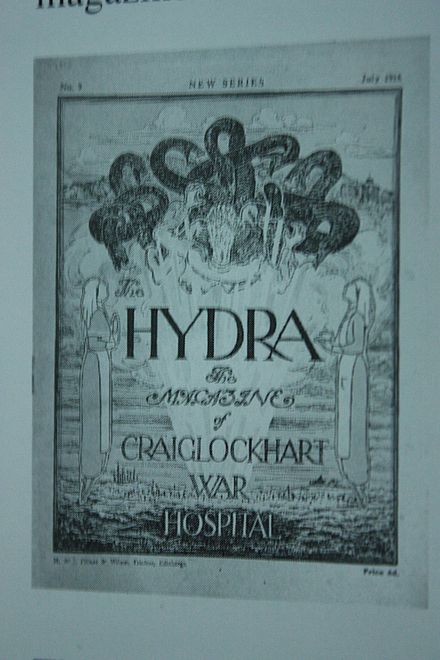
The Hydra was a magazine produced by the patients of the Craiglockhart War Hospital, noteworthy for having been edited at one time by Wilfred Owen, and for including poems by Siegfried Sassoon.[1] The magazine was headquartered in Edinburgh.[1]Another editor was Black Watch officer James Bell Salmond, who went on to be editor of The Scots Magazine and was later the Keeper of Muniments at the University of St Andrews.[2] In 1918 George Henry Bonner became the editor.[1] The magazine ceased publication the same year.[3]
https://en.wikipedia.org/wiki/The_Hydra
While researching for a history class, I located online scans, really interesting…
http://ww1lit.nsms.ox.ac.uk/ww1lit/search?query=the+hydra&collection=1&Search=Go
“A Sonnet: To Wilfred Owen” (and “The Front”)
I wanted to share this little poem that was written to be from the perspective of a WWI soldier visiting what used to be a battle site. In the fall, UMW’s Chamber Choir (that includes me) performed this piece, and I fell in love with the text. The text is titled “A Sonnet: to Wilfred Owen”. Given that we’re meant to read Owen for next class, I figured it was at least a little appropriate. It appears it was written only for the piece, which is titled “The Front”, so I could only find it on the sheet music’s home page. The piece itself, along with the poem, was written and released in January 2020. I think it’s interesting to look at this poem, knowing that Matthew Taylor King, as far as I could find, was quite young, and thus was not a part of WWI in any way. The music piece itself is also incredibly moving. I’ll include a link to a video of it if you want to check that out. Anyways, I’ve been rambling. I just wanted to share 🙂
A Sonnet to Wilfred Owen:
Have you seen the Front? It is not as it
Used to be. Larks sing. Shells rust. Fevers cool.
The Winter of the world is in tacit
Armistice with Spring. Living waters pool
In tired foxholes. Proud young forests shelter
No man’s land. Moss gilds sandbags, else they spill.
Mine-sunk craters yield to ponds where elder
Turtles sun themselves, warm amid Aisne’s chill.
Only the mud is as it was—partout.
It clings to every sole. But certain fields
Block the charging sludge. In them, marble shields
—Or are they dragon’s teeth?—mark you, guard you
From the mire. You rest. Your dagger’s sheathed. And yet:
How swiftly Nature heals; how slowly men forget.
-Matthew Taylor King